The instrument of the moon · new moon of November 8, 2026
Ipu heke
The rhythm of hula, in two gourds
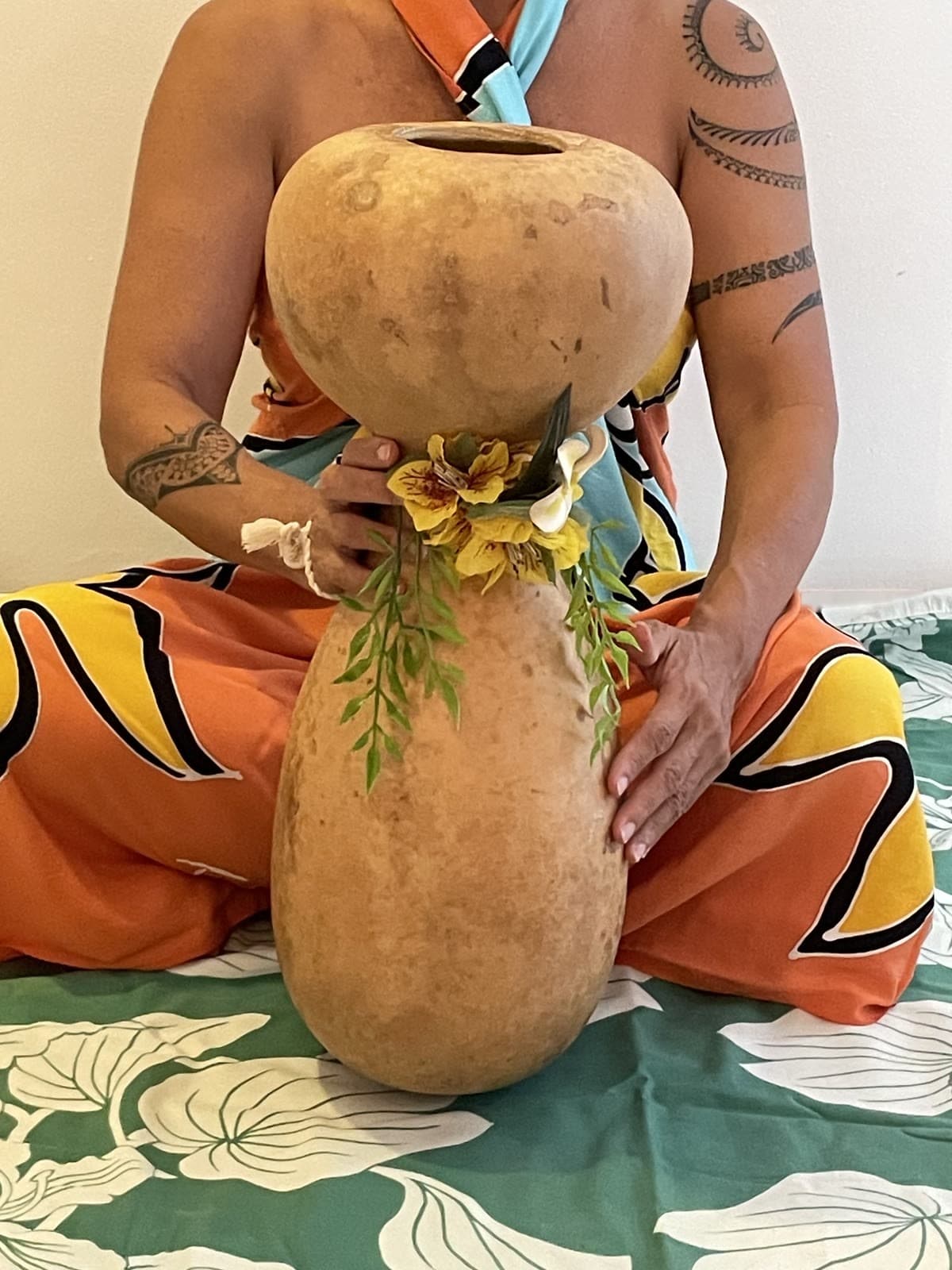
The ipu heke plays no melody. It keeps the beat of the chant, and the one who chants is the one who plays it.
Two gourds, no drumhead
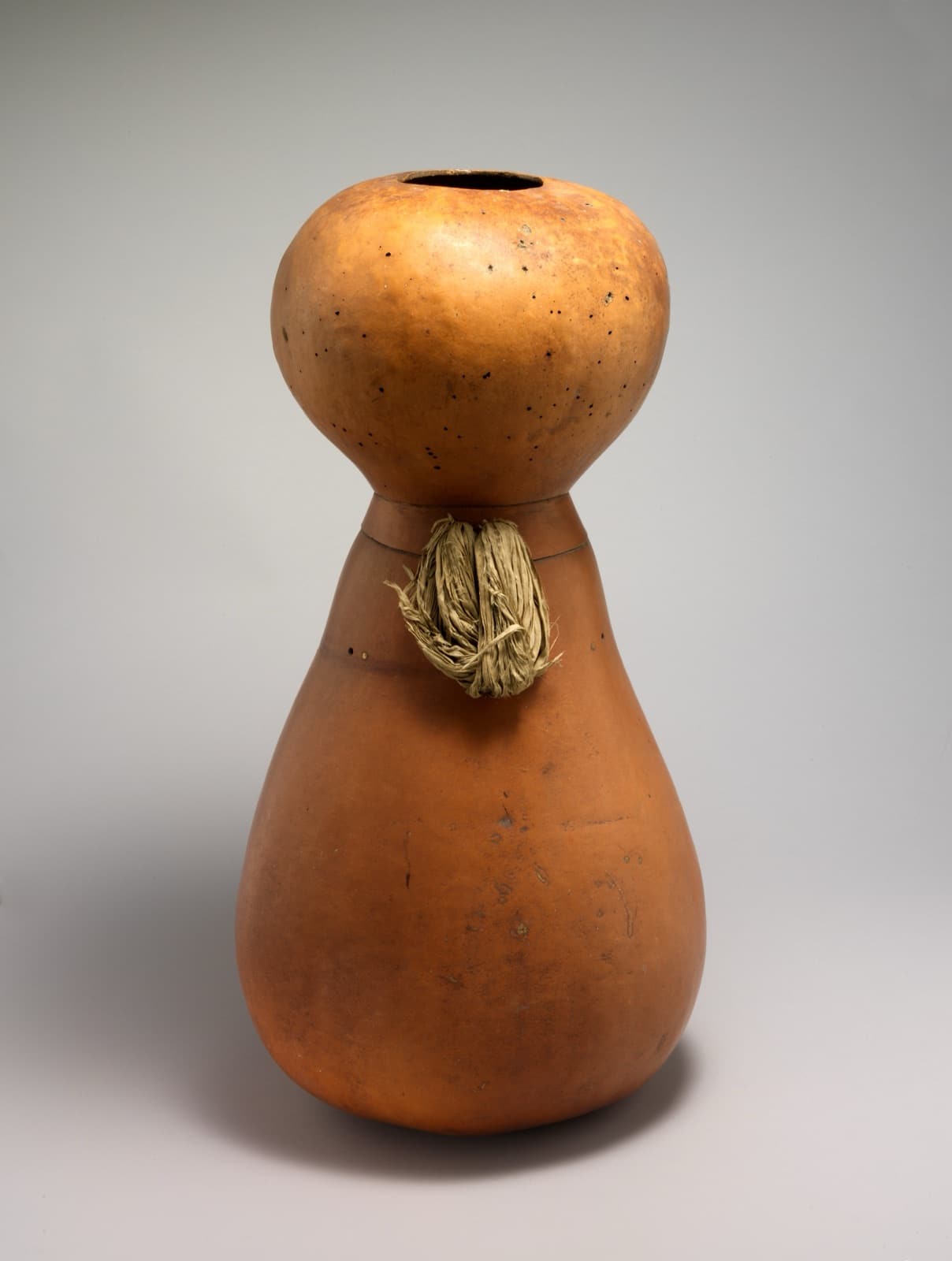
The ipu heke is made from two gourds, grown to reach just the right shape. Once harvested, they are hollowed out and left to harden. The smaller one is turned upside down and glued onto the larger one, traditionally with breadfruit sap. A round hole cut in the top lets the sound out. Together, they form a figure eight1.
There is also a simpler form, the ipu heke ‘ole: a single gourd, "without a top section"2. It, too, accompanies hula3.
The ipu heke is often called a drum, but it isn’t quite one: there is no skin stretched across it, only the dried rind of the fruit4. It is pure percussion. The two hollows act as one, and the air trapped inside gives a deep, full sound that, surprisingly, doesn’t carry far4.
Two strokes
Playing it comes down to two strokes. The musician sits and lays a folded cloth on the ground. On the first beat of each measure, the ipu comes down vertically onto this pad: a deep, resonant tone. For the beats that follow, the player holds it off the ground and strikes the side of the gourd with the flat of three or four fingers: a sharp tap1.
Every rhythm grows out of these two sounds. The playing is light when the chant is tender; when it turns spirited, the ipu is raised high and struck hard4.
Both men and women play it1. The Metropolitan Museum of Art in New York holds one, 30 inches tall, that belonged to the royal ensemble of King Kamehameha IV in the mid-nineteenth century1.
The one who chants is the one who plays
In hula, the ipu heke is in the hands of the ho‘opa‘a, the chanter, who strikes it to keep the rhythm of the chant5. The dancers, the ‘ōlapa, carry the text through their movements: hula is first and foremost an art of words5.
In some seated dances, the roles merge entirely: everyone kneels, and each performer chants and plays their own ipu at the same time4.
On stage
Hula’s biggest gathering is the Merrie Monarch Festival in Hilo, on the Island of Hawai‘i. Every year, the week after Easter, its official competition takes place at Edith Kanaka‘ole Stadium; it has been held since 19716. Each performance opens with an entrance dance, the ka‘i, and closes with an exit dance, the ho‘i. In ancient hula, the chant is judged just like the dance, and adornments must come from plants7.
Behind the stage are the gardens. In Keauhou, on the Kona coast, Kalim Smith grows gourds and turns them into ipu heke. He matches the shape and sound of each one to the kumu hula who chooses it, then places it in their hands himself8. Locally grown ipu have become rare: those used for hula in Hawai‘i today are almost all imported9.
Patricia’s ipu
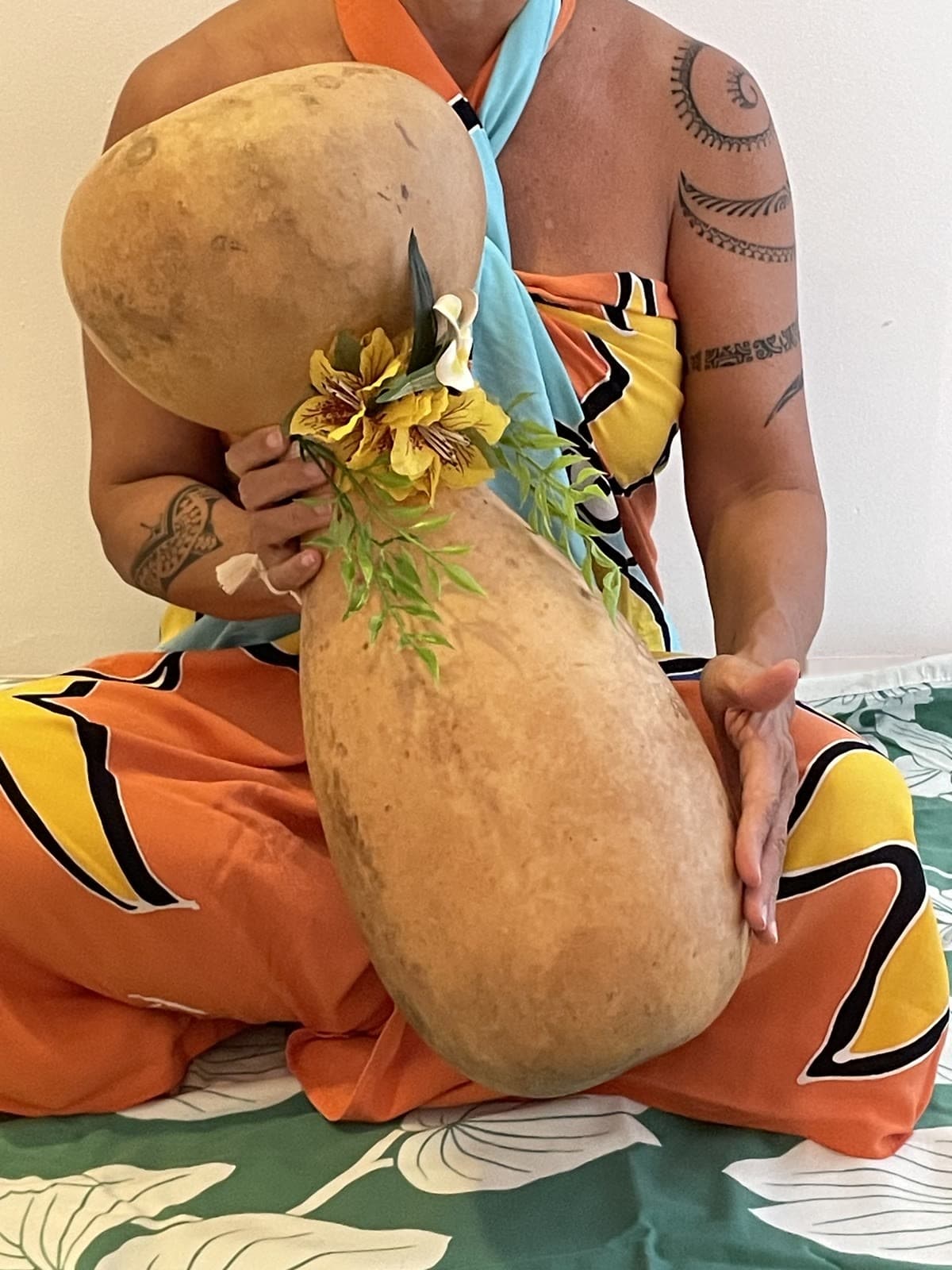
Patricia’s ipu was brought back from the United States. She doesn’t play it as a musician: the sounds on this page are experiments, played by feel — the two strokes and nothing more. What she hears in it: "a muffled sound rising from the earth."
Next new moon: Tuesday, December 8. Another instrument will step out of the collection.
With each new moon, an instrument from the collection tells its story, whether or not it is played in a session.
A session is something else: some fifty minutes to let body and mind unwind, carried by the instruments of the four worlds of sound.
Notes and sources
- The Metropolitan Museum of Art, "Ipu Hula (gourd drum)," Hawai‘i, 19th century, accession no. 89.4.754↩
- Kalani N. Po‘omaiahealani, "Nā Mea Ha‘a Pa‘ahana – Hula Instruments," Huapala↩
- National Park Service, Hawai‘i Volcanoes National Park, "‘Ike Hana No‘eau," episode 3 (ipu heke ‘ole), news release, May 4, 2022↩
- Nathaniel B. Emerson, Unwritten Literature of Hawaii: The Sacred Songs of the Hula, Smithsonian Institution, 1909, pp. 73 and 142↩
- Bishop Museum, Hawai‘i Alive, "Ipu heke"↩
- Merrie Monarch Festival, "History of the Festival"; Wikipedia, "Merrie Monarch Festival"↩
- Ed Collier, kumu hula and festival judge, "Merrie Monarch: Judging Criteria," Hawaii News Now, 2010↩
- Nancy S. Kahalewai, "Ipu Stories—From Seed to Stage," Ke Ola Magazine, July–August 2022↩
- Hālau Ka‘eaikahelelani, Native Land Hawai‘i↩